A Letter to CBSE Accountancy Class XII Board Exam Students
Dear Students,
As you prepare to appear for your CBSE Accountancy Class XII Board Examination, I want to remind you of a few important points that will help you perform your best.

Dear Students,
As you prepare to appear for your CBSE Accountancy Class XII Board Examination, I want to remind you of a few important points that will help you perform your best.
Every year, lakhs of CBSE students leave the exam hall saying the same thing:
👉 “The paper was easy… I just couldn’t finish on time.”
What most students don’t realise is this:
Your board exam doesn’t begin when writing starts.
It begins 15 minutes earlier.
Those often-ignored 15 minutes of reading time silently decide whether a student scores average marks or topper-level marks.

My Kid is Writing the Exam, But I’m the One Holding My Breath.
As CBSE board exams approach, one truth stands clear: success is not about studying harder, but studying smarter.
As a teacher of Accounts, Economics, and Business Studies, I have seen students with average effort score brilliantly—and hardworking students struggle—simply because of how they prepared.
Let’s focus on positive strategies that help students perform confidently and consistently.
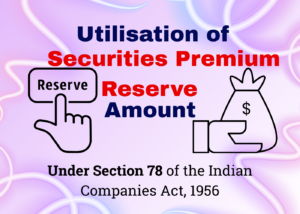
When a company issues shares at a premium (for example, a share of face value ₹10 issued at ₹12, i.e., ₹2 premium), the extra amount collected is credited to the Securities Premium Reserve Account.
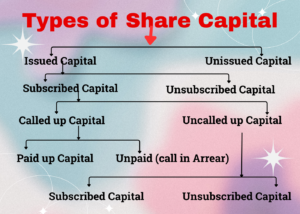
Share Capital is the amount of money a company raises by issuing shares to the public (shareholders). It represents the ownership money invested in the company by shareholders.
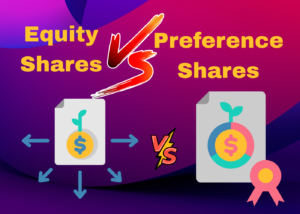
A share is a unit of ownership in a company. If you buy shares, you become a shareholder and get rights like receiving dividends and voting in company matters.
Imagine a large company as a giant pie. A “share” is a single slice of that pie. When you purchase a share, you are buying a defined fraction of ownership in that company. This ownership status, known as being a shareholder, comes with specific privileges. These can include a potential claim on a portion of the company’s profits and a voice in major company decisions.
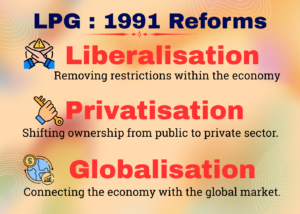
Back in the late 20th century, many countries decided to fundamentally reshape their economies. This shift was built on three core ideas: letting go of control, changing who owns things, and opening up to the world. While they often work together, it’s helpful to understand what each one means on its own.
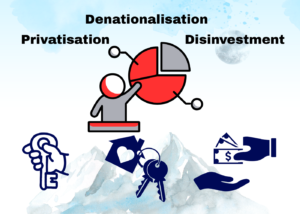
Think of privatisation as moving a business out of government control. It means selling off all or part of a state-owned company – its ownership, management, and control – to private individuals or firms. Why do governments do this? Often, the goal is to boost efficiency and profits. Without constant political meddling, these businesses might innovate more and offer better service. Of course, there are downsides; sometimes jobs get cut or prices go up for consumers. A clear recent example is India’s national carrier, Air India, which transitioned back to the Tata Group in 2021. This move can happen entirely or just partially, using methods like direct sales or reducing the government’s stake (disinvestment).
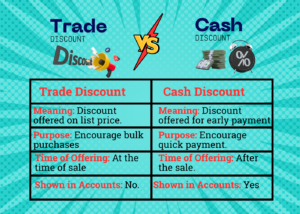
In the business world, offering discounts is a common strategy used to increase sales and improve financial efficiency. Two frequently applied types of discounts are cash discounts and trade discounts. Although both are reductions in price, they serve different objectives and are applied at different stages in the buying and selling process.
Dear Students, As you prepare to appear for your CBSE Accountancy Class XII Board Examination, I want to remind you of a few important points that will help you perform your best.
Every year, lakhs of CBSE students leave the exam hall saying the same thing: 👉 “The paper was easy… I just couldn’t finish on time.” What most students don’t realise is this: Your board exam...

My Kid is Writing the Exam, But I’m the One Holding My Breath.